In an era where seamless communication can make or break a business, Grandstream’s innovative telephony solutions promise to revolutionize networks through customization and scalability. Their carrier-grade IP phones, especially the GRP series, streamline deployment and management via centralized platforms like GDMS, allowing organizations to adapt swiftly to evolving needs. But how does this technology transform traditional setups into strategic assets? By leveraging VoIP and cloud management, businesses can personalize call flows, enhance productivity, and ensure security—all while reducing operational costs. From remote teams to expanding enterprises, the capacity for rapid reconfiguration and intelligent routing reshapes expectations around business communication. Yet, as these systems grow more sophisticated—integrating AI, automation, and analytics—are organizations truly prepared to harness their full potential? Grandstream’s solutions stand at the forefront, offering not just tools but a future-proof foundation that balances innovation with reliability, prompting critical questions about the next evolution in connected enterprise performance.

Transforming Business Communication with Customizable Telephony Solutions
In today’s fast-moving business landscape, effective communication isn’t just a plus—it’s a necessity. Companies rely on their phone systems not only to connect with clients but also to coordinate teams, streamline operations, and project professionalism. As organizations grow and adapt, traditional telephony setups often struggle to keep pace, leaving gaps that can hinder responsiveness and efficiency.
This is where customizable telephony solutions come into play. Unlike fixed, legacy landlines, modern systems built on IP and cloud technology offer a level of flexibility that can be tailored specifically to each company’s needs. They transform communication from a static utility into a strategic asset, allowing businesses to craft networks that are responsive, scalable, and aligned with their unique workflows.
Personalization is at the heart of these solutions. Businesses can assign dedicated extensions, implement intelligent call routing, and integrate telephony seamlessly with other digital tools. This means calls reach the right person quickly, auto-attendants handle inquiries efficiently, and teams can work remotely without losing connectivity or control. Custom features help organizations present a consistent, professional image, which builds trust and enhances customer experience.
The transition from traditional to customizable telephony is powered by technological innovations like Voice over IP (VoIP). VoIP transmits voice calls over the internet, eliminating the limitations of physical lines and enabling rapid deployment and reconfiguration. Cloud platforms such as Grandstream’s GDMS provide centralized control, allowing administrators to manage thousands of devices remotely, update configurations instantly, and troubleshoot issues swiftly—saving time and reducing operational costs.
This flexibility supports rapid growth and organizational shifts. Companies can add new users, change call flows, or expand into new markets without costly hardware upgrades. Setting up new extensions or rerouting calls can be done remotely in minutes, minimizing downtime and ensuring that communication infrastructure scales in tandem with business expansion.
Effective planning is crucial when adopting these systems. Businesses should assess their network capacity, ensuring sufficient bandwidth and security to handle VoIP traffic. Once infrastructure is sound, centralized management tools enable pre-configuration of devices, streamlining deployment across multiple locations. Training staff on management platforms further simplifies ongoing maintenance, making the entire process more efficient and less disruptive.
Looking ahead, the potential of customizable telephony continues to grow. Advances in AI and automation are making call routing smarter, voice recognition more accurate, and analytics more insightful. These innovations enable organizations to automate routine interactions, personalize customer engagements, and gain valuable insights into communication patterns. In a digital-first world, having a flexible, intelligent telephony network is increasingly vital for remaining competitive.
Understanding how telephony evolved from simple landlines to sophisticated IP-based systems highlights the immense value of current solutions. Modern systems provide not just enhanced features but also a foundation for future growth and innovation. They allow businesses to develop communication networks that are resilient, adaptable, and aligned with strategic goals, turning telephony from a basic utility into a powerful driver of efficiency and customer satisfaction.
Ultimately, customizable telephony reshapes how organizations communicate, making it more agile, responsive, and tailored than ever before. It empowers businesses to build communication networks that grow with them, respond to changing demands, and support a seamless, professional experience for both staff and clients. Embracing these solutions now sets the stage for a more connected, efficient, and competitive future.

From Landlines to Digital Innovation: The Evolution of Telephony Technology
Telephony technology has come a long way from its origins relying on simple analog landlines. Back then, communication depended heavily on bulky hardware connected by physical wires, making it difficult to scale or adapt as businesses grew. This hardware-centric approach limited flexibility and often meant costly upgrades whenever expansion was needed. As digital technology developed, the introduction of Voice over Internet Protocol (VoIP) revolutionized business communication by shifting voice calls from traditional lines to the internet, opening the door to a new level of flexibility and scalability.
At the core of modern telephony are IP phones, which serve as the primary hardware for voice communication over IP networks. These devices range from basic models to advanced touchscreen units with video capabilities, all designed to integrate seamlessly into customizable telephony environments. They support features like personalized extensions, call forwarding, and sophisticated routing, allowing organizations to tailor their systems to specific workflows and user needs. Cloud management platforms, such as Grandstream’s GDMS, further enhance this ecosystem by providing centralized control over thousands of IP phones, simplifying deployment, updates, and ongoing management.
The shift from traditional landlines to digital, IP-based systems has unlocked unprecedented scalability and adaptability. Businesses now deploy cloud-managed solutions that can be expanded or scaled down quickly in response to growth or changing demands. This agility enables rapid reconfiguration—adding new extensions, rerouting calls, or integrating with other digital tools—without the need for extensive hardware changes. Such flexibility makes it easier for organizations to respond to market shifts, expand into new regions, or support remote teams, transforming telephony from a fixed utility into a strategic asset that grows with the business.
Implementing these scalable solutions requires careful planning. Organizations should begin with a network assessment to ensure sufficient bandwidth, security, and low latency for VoIP traffic. Once the infrastructure is sound, centralized management tools allow for pre-configuration of devices before deployment, often remotely. This process accelerates rollout times and minimizes errors, reducing downtime and operational disruptions. Staff training on management platforms ensures ongoing maintenance and troubleshooting are straightforward, supporting a smooth transition from legacy systems to modern, customizable networks.
Advances in telephony continue to accelerate, driven by innovations like artificial intelligence, automation, and analytics. These technologies make call routing smarter, voice recognition more accurate, and communication insights richer. As a result, organizations can automate routine interactions, personalize customer experiences, and extract meaningful data from their communication channels. This ongoing evolution enhances the value of IP-based systems, allowing businesses to stay agile and competitive in an increasingly digital landscape.
Understanding the evolution from analog landlines to sophisticated IP-based systems helps highlight the immense benefits of current solutions. Modern telephony offers not just advanced features but also a flexible foundation for future growth and innovation. It enables organizations to craft resilient, scalable, and personalized communication networks that align with their strategic goals. This progression underscores the importance of adopting adaptable telephony solutions that can evolve alongside a business’s needs, ensuring long-term efficiency and competitiveness.
Grandstream’s Pioneering Devices: Building Scalable and Intelligent Communication Networks
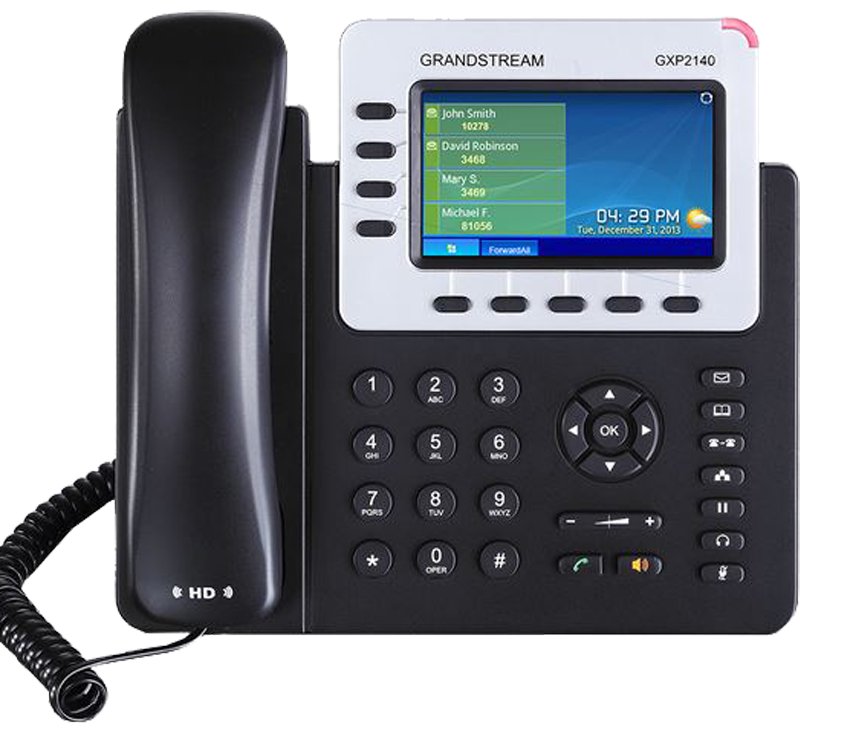
Grandstream’s devices are revolutionizing how businesses achieve tailored, efficient, and scalable communication networks. Their IP phones, particularly the GRP series, are designed to simplify mass deployment and management, making it easier for organizations to expand and adapt without the usual headaches of manual setups. By leveraging cloud provisioning and centralized management through Grandstream’s GDMS platform, administrators can configure, update, and monitor thousands of devices from a single, intuitive interface. This centralized control streamlines deployment, reduces configuration errors, and accelerates the rollout process, ensuring that businesses can quickly adapt their communication infrastructure to meet evolving needs.
The hardware itself reflects a focus on versatility and user experience. The GRP series IP phones feature high-resolution screens, HD audio quality, and programmable keys that enhance usability across different roles and environments. Whether for front-line staff, remote workers, or executives, these devices support personalized call routing, extension management, and seamless integration with other business tools. This flexibility allows organizations to craft communication systems that feel intuitive and aligned with their workflows, promoting productivity and professionalism across teams.
A key strength of Grandstream’s approach lies in its management tools. GDMS enables pre-configuration of devices before they arrive on-site, which significantly speeds up deployment and minimizes on-the-ground setup time. Once in place, the platform offers real-time monitoring, firmware updates, and troubleshooting capabilities that keep the system running smoothly without disrupting daily operations. This ease of management not only reduces operational costs but also ensures that the communication network remains resilient and responsive, even as the organization scales or shifts focus.
Network performance is another area where Grandstream’s innovations shine. Their devices support Quality of Service (QoS) settings that prioritize voice traffic, ensuring clear, consistent calls during busy periods. This is crucial for maintaining customer satisfaction and internal efficiency, especially when multiple calls happen simultaneously. Additionally, the devices are built to handle fluctuating network conditions with advanced error correction and traffic management features, which help maintain call stability and quality, minimizing disruptions and maximizing the value of the communication system.
Security features are integral to Grandstream’s product design. Their IP phones support secure provisioning processes and encrypted communication protocols, safeguarding sensitive conversations and organizational data. Firmware updates are regularly released to patch vulnerabilities and introduce new features, helping organizations stay ahead of potential threats. This commitment to security ensures that deploying Grandstream devices doesn’t just improve functionality but also maintains the integrity and confidentiality of critical communications.
Looking ahead, the potential for these devices continues to expand. Integration with artificial intelligence and automation technologies is making call routing smarter, voice recognition more accurate, and analytics more insightful. These advancements enable organizations to automate routine interactions, personalize customer experiences, and gain deeper insights into communication patterns. Such innovations will help businesses automate workflows, improve service quality, and better understand their engagement metrics—all within a flexible, scalable framework.
Choosing Grandstream’s devices means investing in a future-proof communication infrastructure. Their focus on ease of deployment, centralized management, and security makes them ideal for organizations seeking to upgrade without sacrificing control or flexibility. By leveraging these tools, businesses can develop communication networks that are not only tailored to their current needs but also capable of evolving alongside technological advances and organizational growth. This forward-thinking approach transforms telephony from a simple utility into a strategic asset that drives operational excellence and customer satisfaction.
In sum, Grandstream’s solutions serve as a robust foundation for building customized, efficient, and scalable communication networks. Their devices enable rapid deployment, simplified management, and secure operation—delivering a seamless experience that adapts easily to changing demands. As AI and automation continue to evolve, these tools will become even more integral, helping organizations automate routine tasks, personalize interactions, and extract valuable insights. Investing in Grandstream’s innovative telephony devices means empowering your business with a resilient, flexible, and future-ready communication system that supports growth, enhances efficiency, and elevates customer engagement.